
Materials
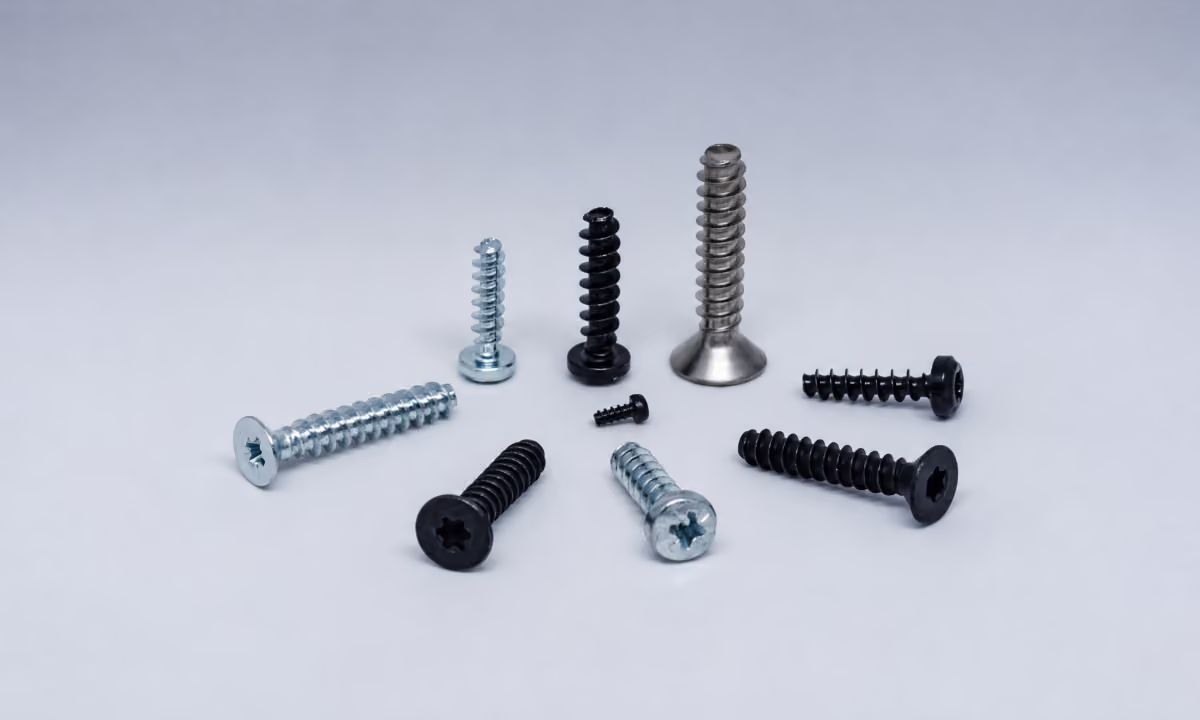
Direct screw fastening means the screw forms its own thread as it is driven in, without a pilot hole and without an additional nut. This saves one assembly step and works in thermoplastics, thermosets, light metals and thin sheet metal.
Which profile suits your component depends on material, wall thickness and load. NDS, NBS, NGF and PT screws cover the common combinations, including vibration-resistant connections. We match the right type to your application and confirm the choice with an approval sample.
Thermoplastics
PT
Light metals
NLS
Thermosets
NDS
Thin sheet metal
NBS
Process
The process in 4 steps
How you get from your first inquiry to ongoing supply: four steps, one dedicated contact person in Velbert, clear feedback on feasibility, manufacturing route and delivery options.
Step 1
Checking your inquiry and drawing
You send us the drawing or component, material, quantity and deadline. We check the details from a technical and commercial perspective and get back to you with an initial assessment of feasibility and manufacturing route.
Material and geometry
We check material, wall thickness and component geometry against your documents.
Screw type
Depending on the material, we narrow it down to NDS, NBS, NGF or PT as a starting point.
Quantity and deadline
The stated quantity and your required delivery date feed into the initial assessment.
Feedback
You receive an expert assessment of feasibility and manufacturing route.
Step 2
Matching screw and material
Based on your inquiry, we define the thread profile and screw type. Material pairing, wall thickness and load determine whether NDS, NBS, NGF or PT is the right choice for your component.
Thread profile
We choose the profile to suit your base material, with no pilot hole at all.
Material pairing
Screw and component material are matched so that the thread forms cleanly.
Vibration resistance
Where vibration is a factor, we take the flank geometry into account for a permanently secure fit.
Approval sample
Before series production, you receive an approval sample to test on your component.
Step 3
Coordinating production at the partner plant
We coordinate production with vetted partner plants, matched to screw type, material and quantity. Incoming goods are inspected in Velbert before they are released for shipping.
Partner plant
Vetted partner plants in Germany, Europe and Asia manufacture depending on screw type and quantity.
Quality inspection
Goods receipt in Velbert, inspection before release for shipping.
Documentation
Inspection report and approval documents accompany the delivery.
Storage
If required, we store partial quantities for predictable, ongoing supply.
Step 4
Delivery and repeat orders
Delivery takes place on the agreed date. For follow-up orders, we work from the stored specification, so your supply stays predictable even when quantities change.
Shipping
Delivery comes directly to you on the agreed date.
Contact person
Your dedicated contact person in Velbert answers questions about batches or documentation.
Repeat orders
For follow-up orders, we work from the stored specification.
Predictability
This keeps your supply reliable even when quantities change.
Material
The right thread profile for each material
Not every screw suits every material. The overview below shows which profile fits which application, from plastics to thin sheet metal.
Direct screw fastening without pre-drilling
Screws for plastics without pre-drilling
Self-tapping screws for aluminium
Thread-forming screw with trilobular profile
Vibration-resistant screws for plastic components
Screws for thin sheet metal
Thread-forming screw with trilobular profile
The NGF screw forms its mating thread directly in the metal component with a trilobular profile, with no pre-drilling at all. This saves one assembly step, especially for steel and metal parts from your production.
Like NDS, NBS and PT screws, the NGF profile covers one of the common combinations of material and load. The screw forms its thread instead of cutting it, and the trilobular profile reduces friction and chips in the component.
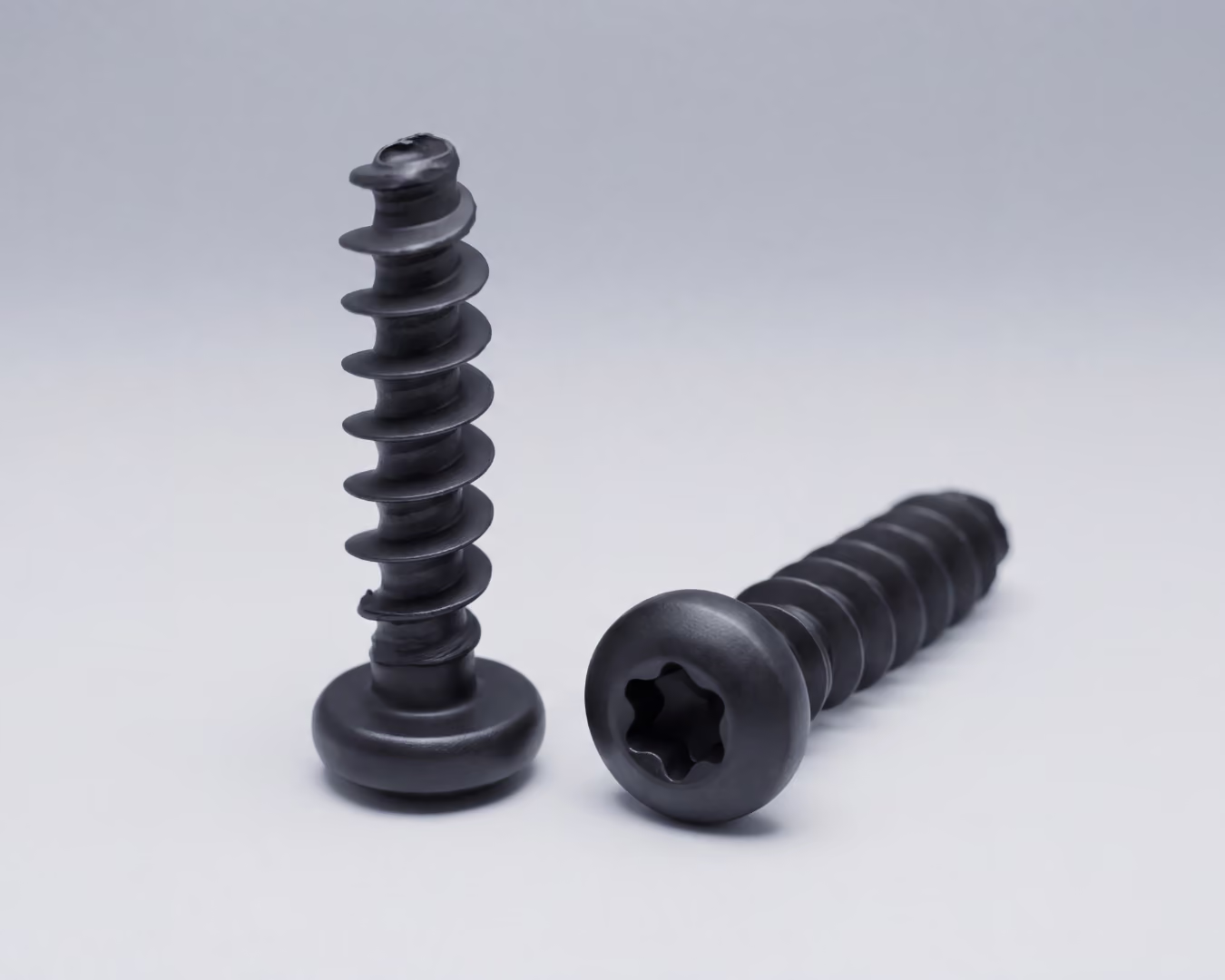
NBS screw for thin-walled sheet metal
NBS screws seat reliably in thin-walled sheet metal without tearing the material as they are driven in. This lets you fasten sheet metal housings and components directly, with no pilot hole at all.
Like NDS, NGF and PT screws, the NBS screw forms its thread directly as it is driven in, without an additional nut and without a separate assembly step. We confirm which profile suits your sheet metal with an approval sample before series production.
Questions
What purchasing and design engineering ask.
01
Do direct screw fastenings need a pilot hole?
No. NDS, NBS, NGF and PT screws form their thread directly in the material as they are driven in. Pre-drilling is not needed as long as wall thickness and material suit the chosen screw. We check this combination against your drawing before we make a recommendation and give you an approval sample to test.
02
Which materials are the screws suitable for?
Thermoplastics, thermosets, light metals and thin sheet metal. Which profile fits in each case depends on wall thickness, material and load. We match the right screw type to your application and confirm the choice with an approval sample before series production.
03
What is the difference between PT and NGF screws?
PT screws are designed for thermoplastics: the thread profile forms in the plastic as the screw is driven in. NGF screws form their thread instead of cutting it and are suitable for metals and more highly loaded connections. We work out together which variant suits your component.
04
Do the connections hold under vibration?
With the right design of flank geometry and material pairing, the connection stays permanently secure even under vibration. We take this requirement into account when selecting the screw and confirm its suitability for your application before the series order.
05
How does sampling for direct screw fastenings work?
You send us the drawing or component, material and quantity. After the technical review, you receive an approval sample to test on your component. As part of a series order, you usually receive approval samples in advance free of charge, before regular series production starts.